
Why Rest Feels So Hard: It’s Not You… It’s Your Nervous System (and Our Culture)
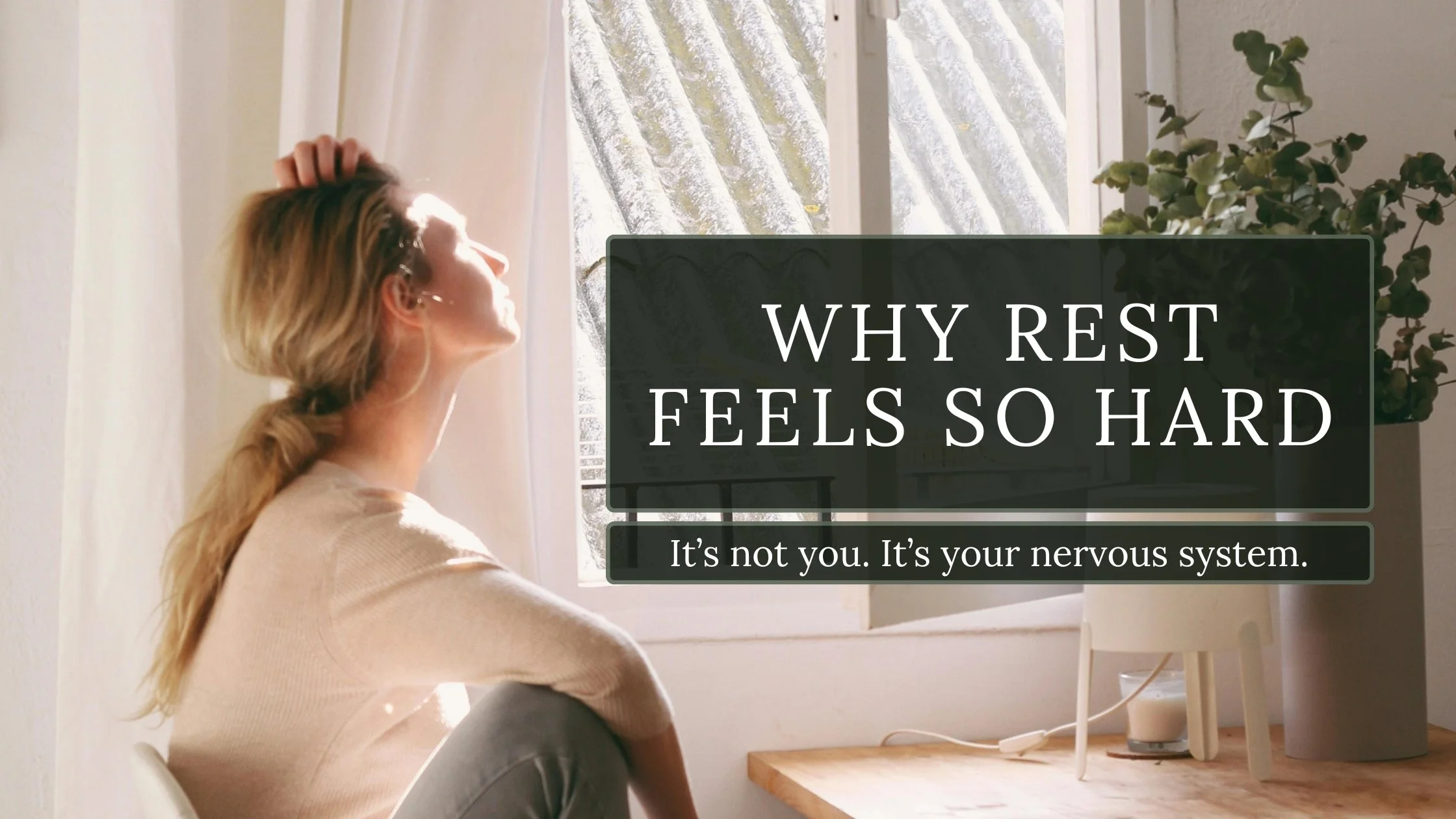
You’re trying to sit still, but your body might feel restless or your mind is racing. This is your nervous system reacting to unfamiliar safety.
You notice tension in your shoulders or a quickened heartbeat when you slow down, signaling your body’s alertness.
As a collective of humans, we say the same thing in therapy rooms, in casual conversations, even in passing moments with strangers:
“I can’t relax.”
“I don’t know how to slow down.”
“Sitting still makes me anxious.”
Why Rest Triggers Anxiety Instead of Relief
And the truth is, they’re not wrong. Rest really does feel uncomfortable and cause anxiety for a lot of us. Not because we’re broken or undisciplined or “bad at self-care,” but because our nervous systems were never taught that rest is safe.
For many people, staying busy was once a survival strategy. Movement, productivity, noise, distraction, these were ways to stay ahead of chaos, avoid conflict, or keep emotional overwhelm at bay. Stillness wasn’t soothing; it was threatening. Silence wasn’t peaceful; it was a space where fears could surface.
So of course rest feels like chaos.
Of course slowing down feels like losing control.
Of course the body tenses when the world finally gets quiet.
This isn’t a personal flaw. It’s a pattern shaped by lived experience.
And then… there’s the culture we live in.
Think about how often you reach for your phone during a quiet moment, filling silence with noise. The pressure to always be productive can make rest feel like a guilty act.
Even if your nervous system wanted to slow down, the world around us doesn’t exactly make it easy.
How Urgency Culture Keeps the Nervous System Activated
It is no secret that we live in a go-go-go culture; a culture that worships urgency, productivity, and constant stimulation. A culture where silence feels strange, where waiting feels wasteful, where being unreachable for five minutes feels like a crime.
We fill every gap with noise:
music, podcasts, YouTube videos, phone calls, scrolling, notifications.
The other day at the eye doctor, he casually asked if I had any advice for him because he realized he’s always listening to something — a podcast, a video, a background voice. He said, “Why do I do that? And how do I stop?”
And the answer is both simple and not simple at all:
Because your nervous system learned to need noise.
Because silence feels foreign.
Because our culture rewards distraction and punishes slowness.
And changing that?
It takes conscious effort.
It takes intention.
It takes choosing discomfort (cue anxiety), on purpose.
Slowing Down as a Nervous System Practice
Slowing down is a practice, not a switch.
Putting the phone away for five minutes.
Letting a text sit without responding.
Driving without a podcast.
Sitting in silence long enough to notice your breath.
These are not small things.
These are nervous system rewiring moments.
They’re acts of resistance in a world that wants you constantly reachable, constantly productive, constantly consuming.
We live in an urgency culture.
And honestly?
I say fuck urgency.
Urgency is what keeps us disconnected from ourselves.
Urgency is what keeps us performing instead of feeling.
Urgency is what convinces us that rest is indulgent instead of essential.
Choosing slowness is not laziness.
It’s remembering that you’re a human being, not a machine.
Rest isn’t supposed to feel easy at first.
It’s supposed to feel unfamiliar.
It’s supposed to feel awkward.
It’s supposed to feel like learning a new language, because in many ways, it is.
But with gentleness, repetition, and safety, the body can learn.
The nervous system can soften.
Silence can become spacious instead of scary.
Stillness can become nourishing instead of threatening.
Rest is not the reward at the end of the transformation.
Rest is part of the transformation.

About Mallory
Mallory is a trauma-informed therapist who supports adults navigating anxiety, overwhelm, and nervous system dysregulation. Her work is rooted in helping people understand their internal patterns with more compassion, safety, and curiosity, especially when slowing down feels hard or unfamiliar. She believes healing isn’t about forcing change, but about creating the conditions where the body no longer has to stay in survival mode.
If this resonates and you’re curious about what it might feel like to experience more safety in your body, you’re welcome to reach out. Mallory offers free consultation calls as a low-pressure space to ask questions, share what’s coming up for you, and see if working together feels like a good fit. Schedule a Free Consultation >>