
A Lesson From the Backseat
Before I get into the lesson, I want to paint the picture. Our home,the one I love so dearly, has a brick driveway, a brick walkway, a brick patio in the back… brick everywhere. (Well, the house is brick too, but that part doesn’t matter.) I’m just trying to get you to imagine it.
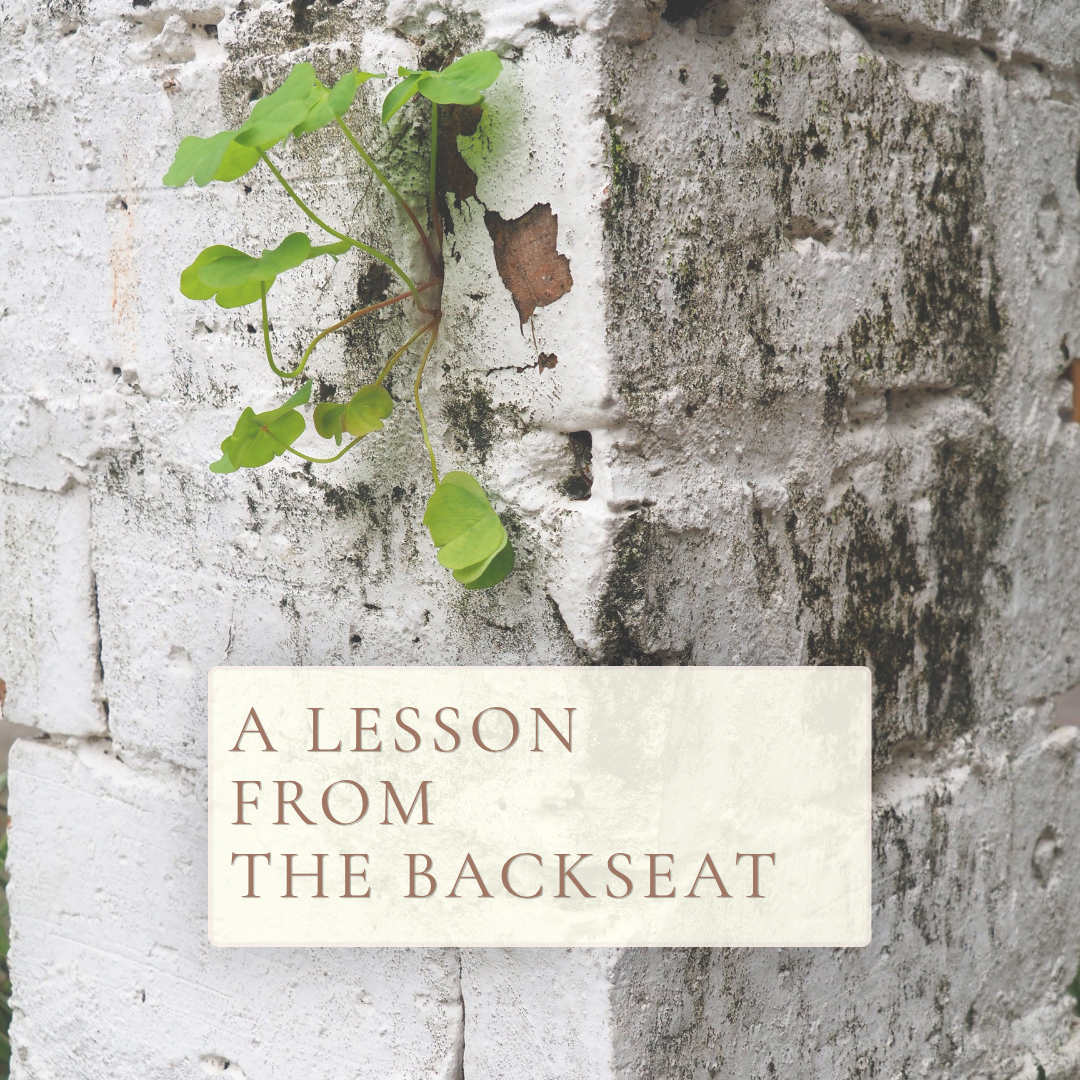
Anyways, through all that brick, especially in these summer months, weeds pop out endlessly. Before life felt busy with kids, I was on top of pulling those dang things. I love gardening and making my yard feel good, not for anyone else’s eyes or the aesthetic or the appeal, but because a calming yard feels good to me.
So we’ve been in this “we really need to pull the weeds in the driveway” era for a while now. The girls (now 5 and 3) love to pull weeds with me. They love gardening and getting their hands dirty. So they’ve joined me on the mission to “de‑weed” our driveway.
What I didn’t expect was for it to turn into a meaningful lesson.
We wrapped up one evening last week, piled into my red minivan, and headed for ice cream. And by the way for all of y’all who said you’d never drive a minivan… hello, that was me. And dang, I love my minivan so much.
It’s like a three‑minute drive to get ice cream, yet my five‑year‑old must have thought to herself, “This is going to be a lesson.”
There’s something about kids in the backseat…no eye contact, just their little voices floating forward while they stare out the window. It’s the best time to talk to them. They’re unfiltered, curious, and somehow more honest when they’re looking at the world instead of at you. Need to talk to your kids about something serious? Do it while driving.
Anyway, she lands with the question:
“Mommy, why do we pull weeds?”
And immediately I feel that familiar internal freeze. This girl has a beautiful way of asking questions that seem simple but somehow expose the fact that we adults don’t actually know why we do half the things we do. I’m literally chuckling to myself as I write this.
I tried to answer anyway.
“Well, honey… weeds grow in places we don’t want them. And some people don’t like the way they look.”
(And don’t judge me (or do) but I totally Googled the real answer later. I wasn’t too off.)
She replied: “But who cares what they look like? Who cares if people think they’re ugly? That doesn’t mean we don’t have to like them or love them.” (DAMN.)
Then she continues: “Your car is dirty and ugly… but who cares?” I laughed because… fair. And then she added: “Our house is ugly… but who cares?” Also laughed. She kept going, building her philosophy with the confidence only a five‑year‑old can have:
“Who cares what things look like if we like them?”
Damn, she was right. Kids have this way of slicing straight through the noise and landing on the truth without trying.
We spend so much time trying to make things look right… our homes, our bodies, our lives, our gardens. We pull weeds because they’re “ugly.” We hide messes because they’re “ugly.” We judge ourselves for the parts that feel “ugly.”
But what if we embodied the mind of a five‑year‑old?
Who cares? Who cares what it looks like? Who cares if someone else thinks it’s messy or imperfect? Who cares if it doesn’t fit the aesthetic or the expectation?
If we love it, if it belongs to us, if it brings us joy, if it’s part of our life, then maybe that’s enough.
Then I started thinking… maybe weeds are just misunderstood plants.
My Google search said:
“People remove weeds to stop plants from fighting over water, light, and food, to keep gardens and lawns looking neat, and to stop bugs and plant sickness from spreading.”
And then I found myself thinking: weeds are just plants. So just because they aren’t aesthetic enough, we pull them to keep the other aesthetically pleasing plants alive. It kind of makes zero sense to me.
(And if you’re wondering, yes, I’m still pulling weeds, but I definitely think more about it every time I do.)
But the lesson here… maybe mess is just evidence of living. Maybe “ugly” is just another word for “real.”
My five‑year‑old taught me something that day:
Joy doesn’t care what things look like. And also, sometimes the wisest lessons come from the youngest voices.
About Mallory

Mallory is a holistic practitioner who helps individuals reconnect with their bodies through a mind-body approach to healing. Her work blends body awareness, somatic practices, and intuitive guidance to support those who feel stuck, disconnected, or overwhelmed.
She believes the body holds deep wisdom and that true healing begins when we learn how to listen. Through her work, Mallory gently guides clients back to their own inner knowing, helping them build trust in themselves, regulate their nervous system, and experience a more grounded, connected way of living.
Her approach is not about fixing or forcing change. It’s about creating space to feel, to notice, and to come home to yourself in a way that feels sustainable and real.
If you’ve been feeling disconnected from your body or unsure how to trust what you’re feeling, you don’t have to figure it out alone. Mallory offers one-on-one support to help you reconnect with your body, understand your patterns, and move forward with greater clarity and ease. Reach out to start your journey back to yourself.